Quick Answer
Automatic vehicle gates are designed primarily around vehicle movement and controlled gate travel. Pedestrians should not be forced to use the same moving-gate opening when a separate pedestrian route is required by the gate design, applicable standard or site condition.
The safety problem is not only the leading edge of the gate. Slide gates can create draw-in and pinch zones along fences and posts; swing gates sweep a large arc. A good site gives people a clearly separated, convenient path so they do not take shortcuts through the vehicle gate.
Why People Use Vehicle Gates Even When Told Not To
Residents and visitors follow the easiest route. If the pedestrian gate is far away, locked, poorly lit or inaccessible, people may walk through the driveway opening while a vehicle gate is moving.
Safety planning should anticipate real behavior rather than rely on a sign alone.
Sliding Gates Create Hazards Along the Travel Path
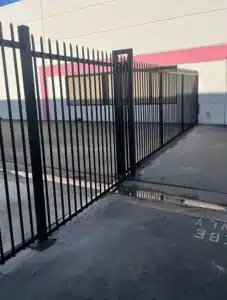
A slide gate moves parallel to a fence or wall and can create pinch, shear or draw-in zones around fixed structures. Openings in the gate can also create reach-through risks depending on design.
Pedestrian routing should keep people away from the gate’s travel and storage area.
Swing Gates Have a Large Sweep Area
A swing leaf can move across a driveway or walkway with substantial force. A pedestrian standing inside the arc may not be visible to a driver or access-control user.
Separate walk-in access reduces exposure to that sweep.
A Pedestrian Gate Needs Its Own Access Plan
A separate pedestrian opening should still address locking, egress, accessibility, lighting and visitor entry. It should not become an inconvenient afterthought that everyone bypasses.
Where codes or accessibility rules apply, the project team should use the relevant authority requirements.
Safety Sensors Do Not Replace Route Design
Photo eyes and edges can reduce risk, but they do not make it good practice to send people through a vehicle gate. Sensors protect defined zones and can be defeated by unusual body position, pets, bicycles or timing.
Physical separation is a different layer of risk reduction.
Retrofit Projects Can Improve Separation
An older property may not have a dedicated pedestrian opening. During gate replacement, fencing work or access-control upgrades, evaluate whether a walk-in gate can be added or relocated.
This is especially important at multifamily and commercial properties with frequent foot traffic.
What to Review at an Existing Site
Observe where people actually walk, not only where the plans say they should. Look for worn paths, people slipping around posts, doors propped open or residents waiting in the vehicle lane.
Those behaviors reveal design friction.
Vehicle Gates Are Not Pedestrian Doors
A large powered gate creates pinch, crush and movement hazards that are difficult to manage if pedestrians routinely share the same path.
Where practical and required, provide a separate pedestrian route that does not force a person to wait inside the gate’s movement area.
This is a site-planning decision, not simply a sign or warning-label issue.
Access Control Should Support the Separate Route
If residents have a pedestrian gate, credential logic should make it convenient enough to use. Otherwise people may continue walking through the vehicle entrance.
Lighting, visibility, accessible path design and lock behavior also matter.
For commercial or multifamily sites, coordinate pedestrian access with the applicable local building, fire and accessibility requirements rather than assuming one layout fits every property.
Visibility at the Crossing Point Matters
Even with a separate pedestrian gate, poor sight lines can create conflicts where the walking route crosses a driveway.
Landscaping, columns, parked vehicles and call boxes can hide pedestrians from drivers.
Design the route so people and vehicles become visible to each other before they share any crossing point.
Avoid Creating a Waiting Area Inside the Gate Path
Keypads, call boxes or pedestrian controls should not require a person to stand where the vehicle gate will travel.
If an existing layout does this, consider relocating the control or creating a separate waiting position during modernization.
Access convenience should not depend on occupying a hazard zone.
Keep Pedestrian Controls on the Pedestrian Route
If a person has to walk into the vehicle lane to reach the keypad or intercom, the site design is undermining the separation.
Place pedestrian credentials and release hardware where users can remain on the walking path.
Small control-location decisions can determine whether people actually use the safer route.
Route Lighting Should Work at Night
A separated pedestrian path is less useful if users cannot see it after dark. Include lighting and visibility in the access plan so people are not pushed back toward the vehicle lane.
Pedestrian-Route Review Checklist
Before approving the layout, verify:
- the walking path stays outside the gate’s movement zone;
- pedestrians have their own credential or release method;
- drivers and pedestrians have adequate sight lines;
- lighting makes the route understandable after dark.
Bottom Line
Pedestrian safety around automatic gates begins with route design. A vehicle gate should not become the default walk-through because the pedestrian path is inconvenient. Separate people from gate travel where the site and applicable requirements call for it, then support that separation with appropriate access control and safety devices.