Quick Answer
A swing gate sags or drags when its leaf, hinges, post, foundation or frame geometry no longer holds the intended position. The operator can make the symptom worse because it repeatedly pushes or pulls on a gate that is no longer rotating freely.
Fix the mechanical gate first. Operator adjustment is secondary and should happen only after the leaf is structurally supported and moves correctly.
Check Whether the Post Is Moving
A gate can appear to have bad hinges when the entire post is leaning or rotating. Compare the post to fixed references and inspect the foundation/attachment.
Hinge Wear Changes the Leaf Position
Pins, bearings and hinge bodies can wear, loosen or crack. Small movement at the hinge becomes a large drop at the leading edge of a wide gate.
Frames Can Twist
Weld failures, corrosion, impact or heavy cladding can distort the gate frame. A twisted leaf may drag even when hinges and posts look acceptable.
Ground and Paving Changes Matter
New asphalt, heaving soil or driveway repairs can reduce clearance under a gate. The gate may be structurally fine but now contact the surface.
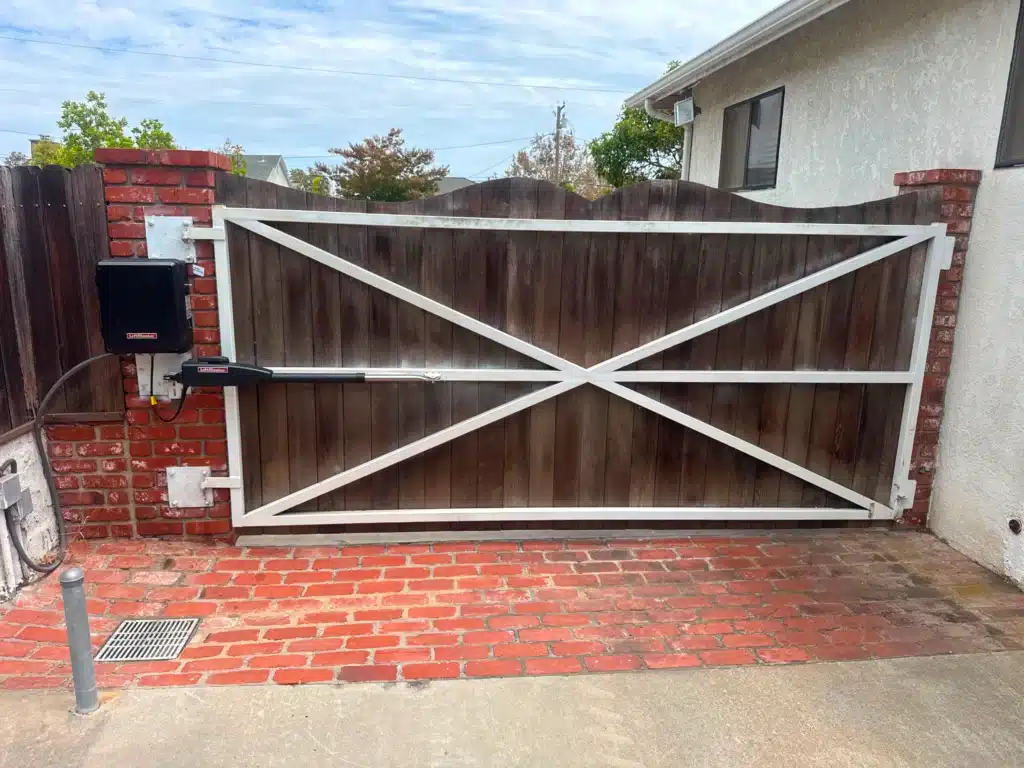
Operator Arms Can Mask the Problem
A powerful arm may pull a sagging gate through the cycle for months. That adds stress to hinges, brackets and the operator.
Do not increase force to keep the gate off the ground.
Heavy or Solid Gates Need Proper Support
Gate weight, width and wind load should match the hinge/post design. Adding wood or metal cladding later can change the original loads.
Recommission After Realignment
Once the gate is mechanically corrected, verify operator arm geometry, limits, stops and safety behavior. The old settings may have been compensating for the sag.
Measure the Sag Instead of Guessing
A technician can compare hinge-side and leading-edge clearances, check whether the post is plumb, and observe how the leaf position changes between open and closed. These measurements help separate hinge wear from post/foundation movement.
Photographs taken from fixed reference points are useful when the problem is slowly getting worse.
Added Cladding Is a Frequent Hidden Cause
Homeowners sometimes add wood boards, privacy panels or decorative metal to an existing frame. That extra weight and wind area can exceed what the hinges, post and operator geometry were designed to support.
If sagging began after a design upgrade, include the added material in the structural diagnosis.
Common Mistake: Shortening the Operator Arm or Moving Stops
Changing arm geometry or stop position can sometimes make a sagging leaf clear the driveway, but it transfers the problem to the automatic system. The gate remains structurally out of position and the operator may now work at poor leverage.
Restore the gate structure first.
Example: Driveway Resurfacing
A gate that dragged after new asphalt may not have changed at all. The driveway surface may simply be higher. The repair could involve restoring clearance or redesigning the opening rather than replacing hinges.
The history of site work matters as much as the hardware condition.
When Sagging Becomes an Operator Problem Too
Once a swing gate has been dragging for some time, the operator may have suffered secondary damage. Arm pivots, brackets, gearboxes and mounting points can loosen or wear because every cycle required more force than intended.
After structural repair, inspect those components before simply reconnecting the operator. A gate that now moves freely may reveal play or damage that was previously hidden by the constant load.
Repair vs. Rebuild
Minor hinge wear may be repairable with new bearings or hinge components. A leaning post, cracked frame or heavily corroded hinge stile can require more substantial fabrication or foundation work. If the leaf itself is overloaded by added cladding, the design may need to be reconsidered rather than repeatedly reinforcing the same hinge.
The repair should restore the geometry and load path, not just lift the leading edge temporarily.
Check the Leading Edge and Hinge Side Separately
A sagging swing gate usually shows more drop at the free end, but the cause may sit at the hinge post, welds, frame or foundation.
Measure the clearance at several points rather than judging by eye alone. If the hinge post has moved, adjusting hinges may only hide the structural issue temporarily.
If the frame itself has twisted, realignment may require more than hardware adjustment.
Wind and Added Infill Can Change the Load
Solid panels, wood cladding or privacy material can add weight and wind pressure to a gate originally built with open pickets.
That extra load affects hinges, posts and the operator arm.
If sagging began after the gate was modified, include the new weight and wind exposure in the repair decision. Repeated hinge reinforcement may not be enough if the structure is no longer appropriate for the modified gate.
Bottom Line
Swing-gate sagging is a structural/mechanical problem involving posts, hinges, frame or clearance. Repair those elements before adjusting the operator, then recommission the automatic system on the corrected geometry.