Quick Answer
A commercial gate that works normally during quiet hours but fails during rush periods may be exposing a duty-cycle, heat, power or mechanical problem. Repeated cycles can heat motors and controllers, drain weak batteries, reveal voltage problems and amplify mechanical resistance. The queue itself can also create unusual command sequences and safety-device activity.
The pattern is valuable diagnostic evidence. Record when failure occurs, how many cycles preceded it, fault codes, weather and whether the gate recovers after cooling.
Heat Is a Symptom, Not the Only Cause
Frequent starts naturally create heat.
Excess heat can be caused by:
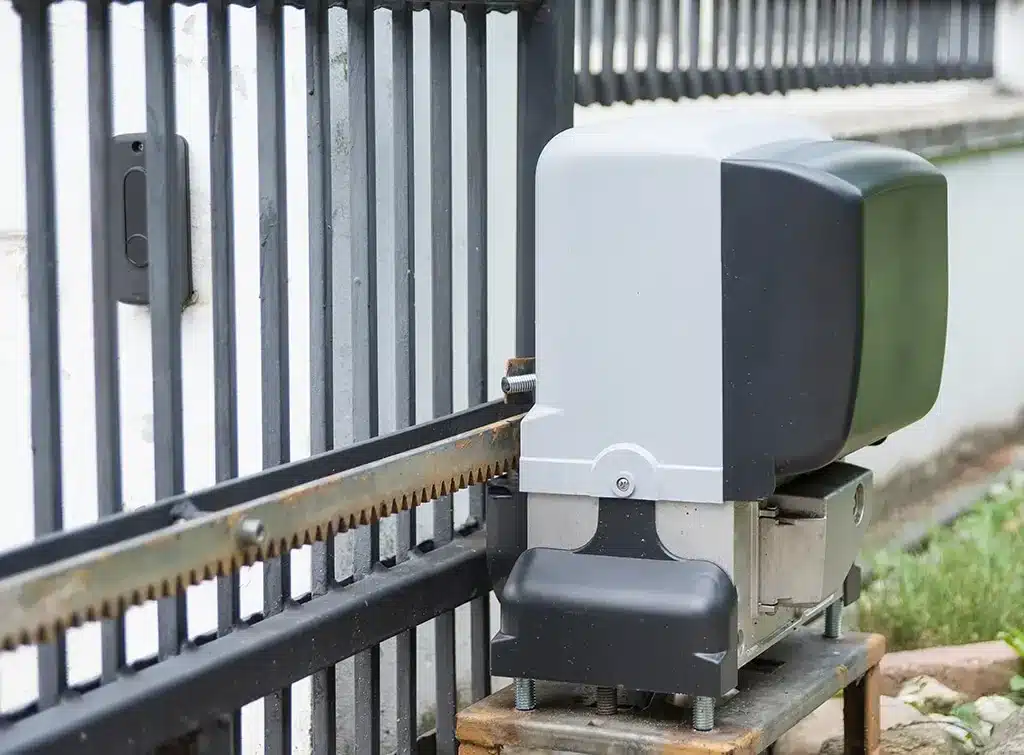
- operator undersized for duty;
- binding gate;
- low voltage;
- failing motor/capacitor depending on design;
- gearbox drag;
- high wind;
- repeated reversing.
Do not assume "overheating" automatically means the operator model is too small.
Weak Batteries Show Up Under Traffic
Many commercial gate systems use batteries for backup or normal DC operation.
A weak battery bank can appear normal when the gate cycles occasionally, then voltage collapses during repeated operation.
Test battery condition under load according to manufacturer procedures.
Mechanical Resistance Multiplies With Cycles
A slightly rough roller or tight hinge may not stop the first cycle.
After dozens of cycles, the operator may:
- heat;
- slow;
- trip current/force protection.
Fixing the mechanical load can restore performance without replacing the operator.
Traffic Can Trigger Safety Inputs Repeatedly
During peak periods, vehicles may:
- stop on loops;
- tailgate;
- block photo eyes;
- reverse unexpectedly.
This can cause more stops/reversals than normal.
Review loop and safety-device event history if available.
Command Queueing
Access systems may send multiple open commands while the gate is already moving.
The controller should handle this, but poor integration can create:
- unexpected holds;
- resets;
- repeated relay pulses.
Check intercom/access-control logic.
Operator Fault Codes
Use the exact manual.
Document:
- error code;
- time;
- gate position;
- cycle count;
- recovery behavior.
A code that appears only under heavy use is highly informative.
Throughput May Need Redesign
If the gate physically cannot process peak traffic fast enough, repeated queues will continue even after repair.
Possible changes:
- faster approved operator;
- barrier arm;
- separate lanes;
- longer hold-open during controlled peak period;
- better credential read point.
Do not speed the gate beyond manufacturer settings or safety requirements.
Preventive Data
For busy sites, track:
- monthly cycles if controller supports it;
- battery age;
- service events;
- fault history;
- peak queue complaints.
Trend data can show that demand has outgrown the original design.
Temporary Workarounds Need Limits
A property may temporarily hold the gate open during a failure.
That can reduce security and may conflict with fire/access policy.
Define who can authorize the workaround and how the site is restored.
Look for Repetition Before the Failure
Peak failures are easier to diagnose when staff records the sequence. Useful notes:
- "fails after about 25 vehicles";
- "only when outside temperature is high";
- "slows before fault";
- "restarts after 20 minutes";
- "battery warning appears first";
- "only visitor lane affected."
These observations can distinguish thermal limits from access-control or detection problems.
Check Power Quality Under Load
A commercial operator may receive adequate voltage while idle and inadequate voltage during motor start or repeated cycles. Long wire runs, weak batteries, poor connections or charging problems can appear only under load.
Electrical tests should follow manufacturer procedures and be performed by qualified personnel.
Queue Management Can Reduce Stress
If the site experiences predictable short peaks, operational changes may reduce unnecessary cycles:
- keep one full security gate open while a barrier controls vehicles;
- pre-authorize visitors;
- separate resident and visitor traffic;
- adjust credential read point.
Any hold-open or sequencing change must preserve the approved safety/security design.
After Repair, Recreate the Peak
A repair should be tested under representative traffic, not one open/close cycle. If safe and practical, run repeated cycles or monitor the next peak period and confirm fault codes do not return.
Why Peak Traffic Changes the Failure Pattern
During light traffic, a gate may have several minutes between cycles to cool and recharge. During a morning rush, commands can arrive before the previous vehicle has cleared, safety loops may remain active, and the operator may reverse or restart repeatedly. That creates a very different electrical and mechanical load from the same number of cycles spread across a full day.
Track the busiest 15-minute and 60-minute windows, not only the daily total. Also record queue length, number of reversals, ambient temperature and whether faults clear after a rest period. Those observations can separate thermal/duty issues from random electronic failures.
Operational Fixes Can Be as Important as Hardware
If peak traffic is the problem, a larger operator may help, but the property should also examine credential speed, reader placement, gate opening speed, lane geometry and whether visitors share the same lane as residents. Reducing unnecessary stop-and-go events can reduce operator stress while improving user experience.
A commercial gate is part of a traffic system. Reliability improves when the mechanical gate, access-control workflow and operator duty are designed together.
Bottom Line
Peak-traffic failures are often the intersection of duty, heat, power, mechanics and traffic behavior.
Use the timing pattern to diagnose the system. Repair the root cause and, if necessary, redesign throughput rather than repeatedly resetting the operator.