Quick Answer
Repair is usually the right decision when the gate structure is sound, the operator is supportable, the fault is isolated and the repaired system can return to safe, reliable operation. Replacement becomes more compelling when structural deterioration, repeated operator failures, obsolete parts, poor gate geometry or changing access/safety needs make continued repair a cycle rather than a solution.
The decision should separate the physical gate, the operator and the access-control system. One can need replacement while the others remain serviceable.
Evaluate the Physical Gate First
Check posts, hinges, rollers, track, frame, corrosion and impact damage. Replacing an operator on a gate that binds or sags simply transfers the problem to new equipment.
Then Evaluate the Operator
Consider age, parts support, board/motor condition, duty rating, battery/charging system, safety-device compatibility and whether the operator still fits the actual gate and traffic level.
Access Control Is a Separate Layer
An old keypad or intercom can be modernized without replacing the gate. Conversely, a new access platform should not be used to justify keeping a failing mechanical operator.
Repeated Failures Matter
One repair can be economical. Repeated boards, batteries, gearboxes and service calls on an obsolete system may indicate declining value.
Look at the pattern across the last few repairs, not only today’s invoice.
Safety and Standards Can Change the Scope
A replacement operator may require a fresh review of entrapment protection, gate construction and monitored devices. A very old installation should not be preserved solely because a compatible used board can be found.
Compare Full Cost, Not One Part
A repair quote should include the cause, parts, labor and commissioning. A replacement quote should include removal, operator, safety devices, controls, power changes and any gate-mechanical corrections.
Only then is the comparison fair.
When Partial Modernization Makes Sense
Sometimes the best answer is staged work: repair the gate mechanics now, replace an obsolete operator, then update access control later. The plan should avoid paying twice for conduit or incompatible interfaces.
Use a Three-Layer Condition Score
A practical decision can score the physical gate, the operator and the access-control/safety layer separately. A sound gate with an obsolete operator may need operator replacement only. A failing gate frame with a relatively new operator may justify rebuilding the gate while reusing the automation if compatible.
This avoids the false choice between "repair everything" and "replace everything."
Signs Repair Is Becoming a Pattern
Repeated service calls for different symptoms, increasing manual resistance, unavailable parts, recurring water damage or repeated temporary welds suggest that the system is consuming money without returning to a stable baseline.
At that point, request a modernization option alongside the next repair quote.
Common Mistake: Comparing Today’s Repair to Only the Operator Box Price
Replacement scope can include operator, mounting, safety devices, batteries, controls, wiring changes, mechanical gate correction and commissioning. A repair may include only one board.
Compare complete installed outcomes, not one component price.
Example: Keep the Gate, Replace the Operator
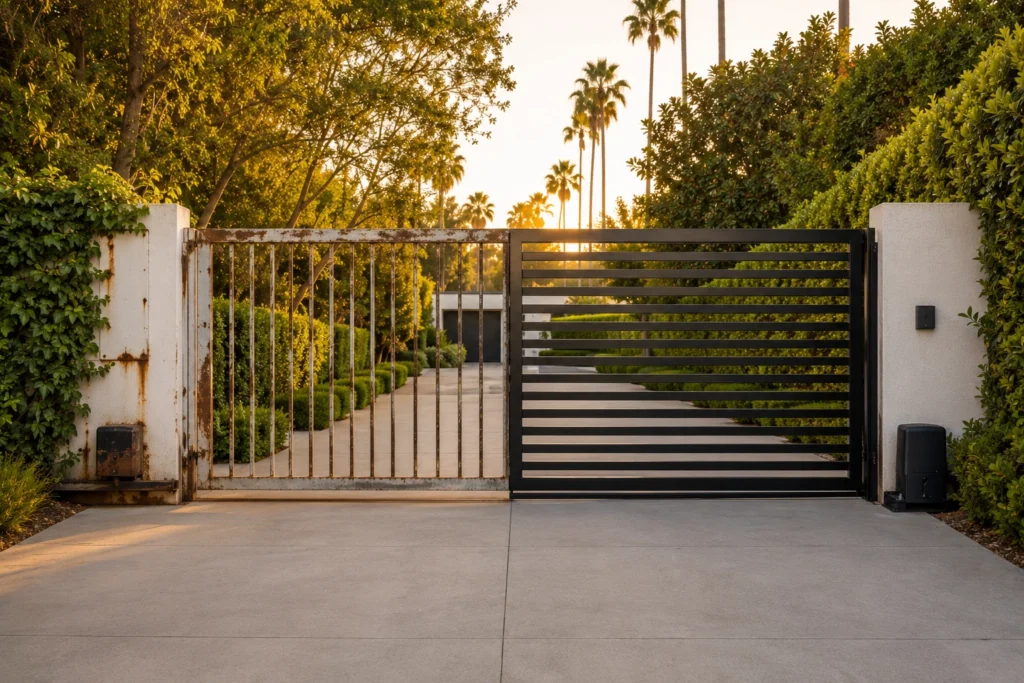
A well-built sliding gate may have healthy track, wheels and frame but an obsolete operator with unsupported electronics. In that case, preserving the gate and replacing the operator can be the best value.
The opposite can also be true. Architecture, not age alone, should drive the plan.
A Five-Year View Can Clarify the Decision
When the immediate repair is expensive, ask what the property is likely to spend over the next several years if the existing system is kept. Include likely batteries, obsolete electronics, mechanical wear, service response and downtime. Then compare that with a planned modernization.
This is not a forecast with guaranteed numbers. It is a way to expose whether the property is repeatedly investing in a platform that no longer fits its use.
Preserve What Still Has Value
Replacement does not have to mean demolition. A strong gate frame, good posts, usable conduit or a modern access-control platform may be retained if compatible. The best modernization often keeps sound infrastructure and replaces the weakest layer.
That approach reduces waste and keeps the project focused on actual condition.
Compare the Remaining System After Each Option
A repair may be attractive when it leaves behind a structurally sound gate, supported operator and reliable safety/access components.
Replacement becomes stronger when a major repair would still leave several old or damaged systems likely to fail next.
List what remains after the proposed work rather than comparing only today’s invoice.
Separate Cosmetic Goals From Technical Necessity
Owners may want a new gate for design, privacy or access-control upgrades even when the existing gate could be repaired.
Those are valid goals, but they should be distinguished from a safety or structural reason for replacement.
A clear proposal can show the minimum technical repair, optional upgrades and full replacement as separate scopes. That makes the decision easier to understand and prevents an aesthetic preference from being presented as an unavoidable repair.
Bottom Line
Repair when the system has a clear, isolated fault and good remaining fundamentals. Replace when structure, obsolescence, repeated failures or safety/compatibility gaps make repairs increasingly temporary. Evaluate gate, operator and access control separately.