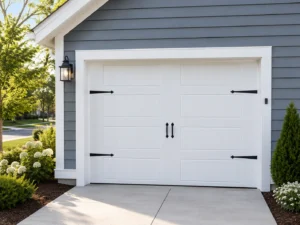
Quick Answer
Repair is usually the better choice when the door is structurally sound, compatible parts are available and the failure is isolated. Replacement becomes more attractive when multiple sections or systems are deteriorated, the door no longer meets the owner’s performance goals, or repeated repairs are preserving an obsolete assembly.
Do not make the decision from age alone. Compare the condition of the door, counterbalance, tracks, hardware, opener, parts availability and the scope of the next repair.
When Repair Is Usually Sensible
A broken spring, worn roller, damaged cable, isolated hinge problem or opener component can often be repaired without replacing a healthy door. The key is that the rest of the system remains sound and compatible.
When Damage Is Spreading Across the System
Multiple cracked sections, corroded hardware, bent tracks and repeated counterbalance problems can turn one repair into a sequence of repairs.
At that point, total condition matters more than the latest failed part.
Panel Availability Can Decide the Question
If a damaged section is discontinued, a matching replacement may be unavailable or may not preserve the door’s construction and appearance.
That can shift the economics toward a full door replacement.
Performance Goals Matter
Owners may want better insulation, quieter operation, improved appearance, glazing, a different material or compatibility with a new opener layout. Those goals can justify replacement even when the old door could technically be repaired.
Do Not Confuse Door Replacement With Opener Replacement
The physical door and automatic opener are separate decisions. A healthy opener may remain compatible with a new door, and a failing opener may be replaced while keeping a sound door.
Inspect compatibility instead of bundling both automatically.
Compare Remaining Life, Not Only Today’s Invoice
A lower repair quote can be the right answer when it restores a reliable system. It can be poor value when several other major components are already near failure.
Ask the technician what condition the non-repaired components are in.
What a Fair Comparison Includes
Compare repair and replacement proposals for removal/disposal, panels, tracks, springs, hardware, opener compatibility, safety commissioning, insulation/features and warranty.
Two quotes are not comparable if one omits major scope.
Separate a Localized Failure From a System-Level Problem
A repair decision is strongest when one failed component explains the symptom and the surrounding system is still healthy. A broken roller, one failed hinge or a serviceable opener part can be a good repair candidate when the door is structurally sound and properly balanced.
Replacement becomes more attractive when problems are distributed across the system: multiple deteriorated panels, recurring spring or hardware issues, severe corrosion, obsolete components, repeated impact damage or a door that no longer meets the owner’s performance goals.
This distinction prevents two opposite mistakes. One is replacing an entire door for a small, isolated failure. The other is repeatedly repairing isolated parts on a door whose overall condition is already driving new failures.
Evaluate What the Next Repair Will Leave Behind
When comparing quotes, ask what remains after each option. If a major repair leaves an old, unsupported opener, damaged sections and worn tracks, the system may still be close to another service call. If a full replacement discards a healthy opener or valuable hardware that is fully compatible, the quote may include more work than necessary.
Also consider non-repair goals such as insulation, appearance, window layout, noise and smart-access features. Those can legitimately support replacement, but they should be stated separately from the technical failure.
The best decision is not "repair is always cheaper" or "new is always better." It is the option that leaves a safe, supportable system whose remaining components make sense together.
Insurance or Impact Claims Should Not Dictate the Technical Scope
When a vehicle or storm caused the damage, an insurance process may influence who pays, but the door still needs a technical assessment independent of the claim.
A repair estimate should document damaged sections, track, hardware, opener attachment and structural conditions clearly enough that the scope can be understood without overstating unrelated wear.
If the owner chooses upgrades beyond the damage repair, separate those items. That keeps the repair decision transparent and avoids mixing restoration with elective improvement.
Use a Five-Year View for Major Decisions
For an older door with several developing issues, estimate what likely maintenance and repairs remain if the current problem is fixed.
For a replacement option, include the new-system warranty and expected maintenance.
This does not require pretending to predict every future failure. It simply prevents a decision based only on today’s invoice when the surrounding condition is already known.
Ask What the Replacement Solves That Repair Does Not
A strong replacement proposal should identify the problems that will disappear with the new door and the old components that would otherwise remain. That makes the added cost easier to evaluate objectively.
Bottom Line
Repair a garage door when the failure is isolated and the rest of the system is sound. Consider replacement when structural deterioration, obsolete parts, multiple failures or new performance goals make continued piecemeal repair less sensible.